Step & Repeat Backdrops in Los Angeles
Los Angeles runs more photographed events than anywhere else in the country, and the step and repeat is the reason a brand survives the photograph. Premieres, press junkets, launches and influencer activations all end with a wall of tiled logos and someone standing in front of it. Configure your size and kit below and see the price as you build it.
Step & Repeat Backdrops in Los Angeles — configure and buy
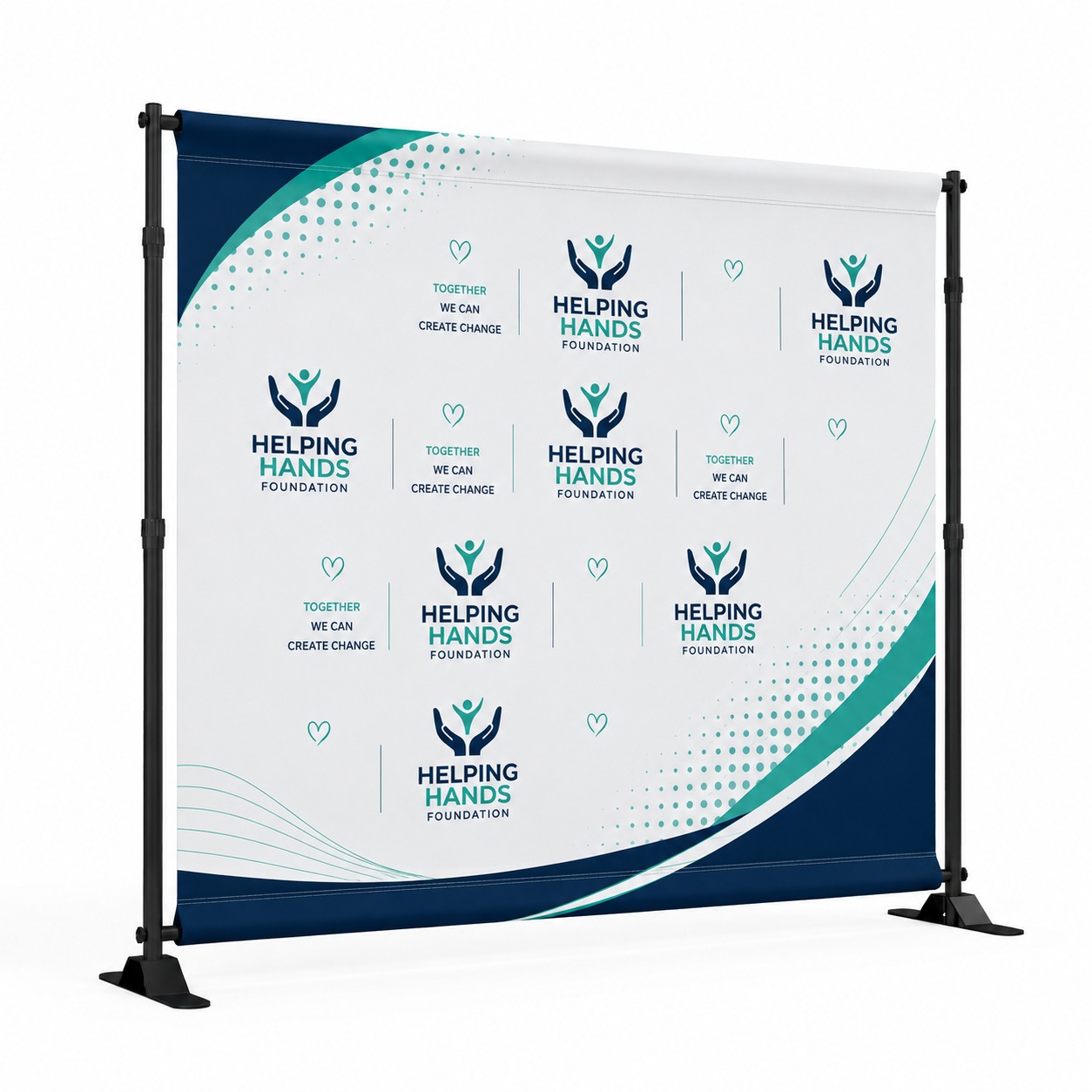 Step and Repeat Backdrop — from $245. Large-format step & repeat media wall for event photography and branding.
About Step & Repeat Backdrops
A step and repeat backdrop exists to survive a photograph. The logo tiles across the surface so that however the shot is framed or cropped — a full-length portrait, a tight headshot, a group of five — at least one complete mark is in the picture. That is the whole job, and it is why the format belongs at press events, premieres, award nights, product launches and influencer activations rather than in a booth. A single large logo is out of frame the moment someone stands in front of it; a repeating grid is the only layout that cannot be cropped out.
Comparing models? The Backdrops category page puts every option we print side by side.
Design it for a cropped photograph
The logo grid is the entire design, and the thing that breaks it is scale. Too large and a tight portrait crop contains one and a half logos; too small and the brand is unreadable in anything but a full-width shot. Stagger the rows so a person standing centre never blocks a whole column, and keep the pattern away from the extreme edges where the frame wraps and the photograph gets cropped anyway.
Leave room for the photographers
The most common LA mistake is a wall that no one can shoot properly. A 10 ft backdrop needs roughly 8 to 10 ft of clear floor in front of it for a photographer to step back far enough to frame a person against it. Check the ceiling too: at about 8 ft tall these clear most venues but not every low-ceilinged hotel suite or restaurant back room.
One frame, many campaigns
The frame is adjustable and the printed graphic is separate, so a production company or agency running several events a year buys the hardware once and reprints per campaign. That is usually the deciding factor in LA, where the same team may need a different sponsor set every few weeks.
Shipping a backdrop to a Los Angeles venue
Frame and printed graphic travel together in one carry case, so a step and repeat can be delivered to a production office or a hotel rather than a loading dock. That suits how they are used here — premieres, press calls and brand activations at venues that are not exhibition halls and have no freight process to book. Production time is shown on the product page above and transit is added on top.
Frequently asked questions
What size step and repeat do I need for a Los Angeles press event?
The standard media wall is 8 ft x 8 ft or 10 ft x 8 ft, up to 120 inches by 96 inches. A 10 ft wall gives room for two or three people in frame; an 8 ft is for single portraits and tighter spaces.
How much space do I need in front of the backdrop?
Allow 8 to 10 ft of clear floor in front of a 10 ft wall. Photographers need to step back to frame a full-length shot, and a wall crammed against a walkway cannot be shot properly however good the print is.
Can I reprint the graphic for a different sponsor set?
Yes. The graphic is replaceable and the frame is reusable, so each new campaign is a reprint rather than a new backdrop.
Is a step and repeat banner the same as a step and repeat backdrop?
The words are used interchangeably. A step and repeat banner is the printed fabric itself; the backdrop is that fabric on its frame. Step and repeat printing is done on a matte fabric rather than vinyl specifically because the wall exists to be photographed, and a glossy surface throws flash straight back into the lens.
Can you deliver a step and repeat to a Los Angeles venue?
Yes. The frame and the printed graphic ship together in one case, to a production office, a hotel or a venue address in Los Angeles. Production time is on the product page, with transit added on top.
Do I supply the repeating logo layout, or do you build it?
You supply it. Send the finished repeating layout as a PDF or JPEG at the ordered size, CMYK at 150dpi with fonts outlined. What you approve on the free proof is what prints, so the spacing you send is the spacing you get.